
CASE STUDY | CREYENTE INFOTECH

Front Arena Trading Platform Migration to AWS

Transformation in Progress

How Creyente is modernizing a mission-critical capital markets trading platform by migrating Front Arena infrastructure from on-prem VMware datacenters to AWS while maintaining uninterrupted trading operations.

600+ Traders Supported
10,000+ Daily ATS Jobs
Scroll to explore

Executive Summary

Creyente is currently leading the migration of a mission-critical Front Arena trading platform from a legacy VMware-based datacenter environment to AWS. This comprehensive cloud transformation initiative represents a strategic shift in how the organization approaches infrastructure management, scalability, and operational resilience in the capital markets space.

The platform supports over 600 traders and executes more than 10,000 ATS batch jobs daily, requiring strict reliability, performance, and regulatory compliance. The scale and complexity of this environment demands a migration approach that prioritizes zero-downtime transitions, comprehensive testing protocols, and meticulous attention to performance characteristics that directly impact trading operations.

The transformation modernizes the infrastructure architecture using containerization, automation, and cloud-native platform engineering practices. The migration program is being executed over approximately one year by a specialized team of seven engineers, ensuring uninterrupted trading operations throughout the transition. This dedicated team brings deep expertise in Front Arena architecture, AWS cloud services, and capital markets operational requirements, enabling a smooth transition that maintains business continuity while delivering significant infrastructure improvements.

The program is currently in advanced testing stages with UAT, Pre-Production environments, and production replica infrastructure successfully deployed in AWS, with final production go-live planned for August following completion of integration and user validation. The phased approach ensures that each component is thoroughly validated before production cutover, minimizing risk and ensuring that the new cloud infrastructure meets or exceeds the performance and reliability standards of the legacy environment.

Business Drivers for Migration

The legacy on-premises platform faced several operational and scalability limitations that prompted the migration initiative. As trading volumes continued to grow and market demands evolved, the constraints of the traditional datacenter infrastructure became increasingly apparent. The organization recognized that a strategic shift to cloud infrastructure was essential to maintain competitive advantage and support future growth trajectories.

The decision to migrate to AWS was driven by the need to transform infrastructure from a capital-intensive, fixed-capacity model to a flexible, consumption-based approach that could scale dynamically with business needs while reducing total cost of ownership.

Key Drivers

Platform Complexity

Migrating a Front Arena trading platform requires careful coordination across multiple tightly integrated components and operational dependencies. The platform environment included real-time trading systems, high-volume batch workloads, distributed compute clusters, and integration with upstream market data systems and downstream risk platforms.

600+ Traders

Real-time trading system supporting hundreds of traders across the trading ecosystem

10,000+ Daily ATS Jobs

High-volume ATS batch execution workloads requiring precise scheduling and monitoring

Distributed PACE Clusters

Multiple Front Arena application services and middleware components

SQL Server Cluster

Production database cluster with strict performance requirements

System Integration

Integration with upstream market data systems and downstream risk platforms
Legacy On-Prem Architecture

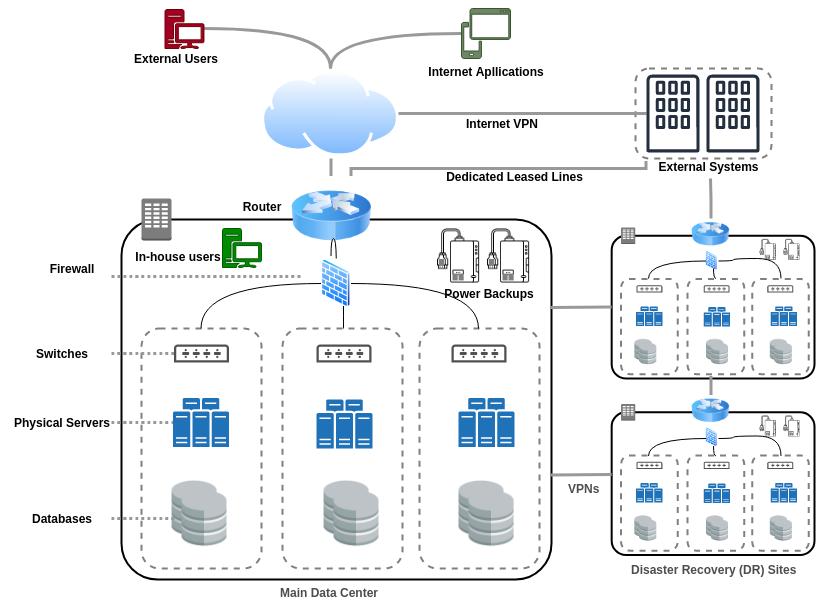
Prior to migration, the platform operated within a VMware-based datacenter environment with Primary and Disaster Recovery datacenter topology. The architecture included ADS cluster deployed on VMware virtual machines behind AVI load balancers, dedicated application servers running ATS, AMB, APS, and APH services, PACE distributed compute on Windows servers, batch orchestration using cron jobs, and shared application storage using NFS.

This traditional infrastructure model, while stable and proven over years of operation, presented several challenges in the modern trading environment. The VMware virtualization layer added complexity and licensing costs, while the static infrastructure allocation made it difficult to respond quickly to changing capacity requirements. Batch processing relied heavily on manual scheduling and monitoring, creating operational overhead and limiting the ability to optimize resource utilization.

The architecture created operational limitations in scalability, infrastructure automation, and cost optimization. Provisioning new environments required significant lead time and manual configuration, slowing down development cycles and limiting the organization's ability to innovate rapidly. The fixed-capacity model meant that infrastructure had to be sized for peak loads, resulting in underutilization during normal trading periods and constraining the ability to handle unexpected volume spikes efficiently.

Migration Strategy

Creyente implemented a structured migration approach designed to minimize operational risk through phased execution including architecture design, AWS platform planning, infrastructure validation, continuous database refresh, extensive user validation, and controlled weekend production cutover. This methodical approach ensured that each phase built upon the success of the previous one, with comprehensive testing and validation gates at every stage. The strategy prioritized business continuity, ensuring that trading operations could continue uninterrupted throughout the migration process while progressively moving workloads to the cloud environment.

Architecture Design

Comprehensive AWS platform planning and infrastructure design, including capacity planning, network architecture, security controls, and service selection to meet performance and compliance requirements

Environment Build

AWS environments build and infrastructure validation across Dev, UAT, Pre-Production, and Production replica environments, ensuring consistency and repeatability through infrastructure-as-code

Database Refresh

Continuous database refresh from on-prem to AWS testing environments, enabling realistic testing with production-like data while maintaining data security and compliance

User Validation

Extensive UAT and batch processing validation with trader participation, ensuring all trading workflows, batch jobs, and integrations function correctly in the new environment

Production Cutover

Controlled weekend maintenance window migration with detailed runbooks, rollback procedures, and 24/7 support coverage to ensure smooth transition to production

AWS Target Architecture

The modernized architecture leveraged multiple AWS services including ADS cluster for trading services, ECS container cluster, PACE distributed compute, Amazon EFS and FSx for storage, SQL Server 2019 Enterprise cluster, AWS Direct Connect integration, and Multi-Availability Zone deployment for high availability.

Front Arena AWS Reference Architecture

Platform Scale

The AWS environment was designed to support large-scale trading workloads with 10-node ADS cluster (r6i.4xlarge), 5-node ECS container cluster (r6i.4xlarge), 7-node PACE distributed compute (r6i.8xlarge), 10-node batch workers (r6i.2xlarge), and 3-node SQL Server production cluster supporting approximately 600 traders.

The infrastructure sizing was carefully calculated based on historical performance data, peak load analysis, and future growth projections. Each component was selected to provide optimal performance characteristics for its specific workload type, balancing compute power, memory capacity, and network throughput requirements. The architecture incorporates Auto Scaling capabilities to dynamically adjust capacity based on demand, ensuring efficient resource utilization while maintaining performance during peak trading periods.

The platform's distributed architecture enables horizontal scaling across multiple availability zones, providing both performance benefits and enhanced resilience. This design ensures that the infrastructure can handle current trading volumes while providing headroom for future growth without requiring major architectural changes.

ADS Cluster
10 nodes (r6i.4xlarge)
ECS Container Cluster
5 nodes (r6i.4xlarge)
PACE Compute
7 nodes (r6i.8xlarge)
Batch Workers
10 nodes (r6i.2xlarge)

Legacy Challenges

AWS Benefits

Modernization Highlights

Batch Processing Modernization

Modernized batch orchestration platform with scalable ATS execution and improved scheduling capabilities

Automation & Platform Engineering

Infrastructure provisioning automation, automated deployment, and standardized configurations

Monitoring & Observability

Centralized monitoring, infrastructure and application observability, proactive anomaly detection

Security & Resilience

Network isolation, role-based access control, Multi-AZ deployment, Auto Scaling Groups, and AWS Resilience Hub testing

Cost Optimization Strategy

The migration enabled multiple infrastructure cost optimization initiatives including migration of PACE compute workloads from Windows to Linux, containerization reducing dedicated server footprint, batch workloads executed using AWS Fargate Spot capacity, and automated shutdown of non-production environments. These initiatives significantly improved infrastructure cost efficiency.

The shift from Windows to Linux for PACE compute workloads eliminated expensive Windows Server licensing costs while maintaining full compatibility with Front Arena applications. Containerization enabled much higher density of workloads per server, reducing the total number of instances required and lowering compute costs. The use of Spot instances for batch processing, which can tolerate interruptions, provided significant cost savings compared to on-demand pricing.

Automated environment management ensures that development and testing environments are only running when needed, automatically shutting down during non-business hours and weekends. This simple but effective strategy reduces compute costs by approximately 65% for non-production environments. Combined with AWS's consumption-based pricing model, these optimizations deliver substantial cost savings compared to the fixed costs of the legacy datacenter infrastructure.

Business Outcomes

The cloud transformation program is expected to deliver several operational and strategic benefits: These outcomes represent a fundamental shift in how the organization approaches infrastructure management, moving from reactive maintenance to proactive optimization and from fixed capacity to elastic scalability.

Final operational outcomes will be measured following the planned production go-live in Q3 2026. Post-migration metrics will include infrastructure cost reduction, environment provisioning time, batch processing efficiency, and platform availability measurements to validate the success of the transformation initiative.

Creyente's Role

Creyente specializes in platform engineering and cloud modernization for capital markets trading systems. Our expertise includes migration and modernization of complex trading platforms such as Front Arena, enabling financial institutions to improve scalability, resilience, and operational efficiency across mission-critical trading environments.

💬 No comments yet. Be the first to comment!

Write a comment
Your email address will not be published. Required fields are marked *
Security token: Active ✓
Scroll